Fix the paint first. Then protect it.
Paint correction removes the swirls, scratches, and oxidation that dull your finish. Ceramic coating protects the corrected paint and makes the vehicle easier to maintain. Most vehicles benefit from both, the right combination depends on the condition of your paint.
Explore Paint Correction & Coating ↓Two services. Two different jobs.
Paint Correction
Improves the paint that's already there.
Machine polishing removes or reduces visible defects such as swirl marks, light scratches, oxidation, and marring. The goal is to improve clarity, depth, reflection, and gloss.
Ceramic Coating
Protects the finish going forward.
A ceramic coating creates a durable, hydrophobic surface that helps water and contamination release more easily and makes routine maintenance less aggressive.
Correction + Coating
Correct first. Protect second.
For most vehicles, this is the ideal sequence: improve the condition of the paint, properly prepare the surface, then protect the result.
The difference between clean paint and corrected paint.
A vehicle can be completely clean and still have paint that looks dull, hazy, or covered in fine swirl marks. Washing removes what's sitting on top of the paint. Paint correction addresses the condition of the finish itself.
Everyday driving, automatic car washes, improper washing techniques, drying towels, dust, and environmental exposure gradually introduce defects into the clear coat. You don't have to abuse a vehicle for the paint to lose its clarity.
Paint correction uses machine polishing to refine the clear coat and remove or significantly reduce those defects. The goal isn't simply to make the vehicle shiny for a day, it's to improve the actual appearance of the paint.
When the surface is properly corrected, reflections become cleaner, metallic paint looks deeper, and the finish has a level of clarity that washing and wax alone can't create.
Three levels, based on your paint's condition:
Paint Enhancement. A single-stage polish designed to refresh the finish, improve gloss, and reduce light marring. Good when the paint is already in relatively good condition and the goal is clarity and gloss, not chasing every defect.
One-Step Correction. Our most common correction option, for moderate swirl marks, wash marks, and everyday paint defects. A substantial improvement in clarity and gloss.
Multi-Step Correction. For heavier swirling, deeper defects, oxidation, or a higher level of deterioration. Multiple polishing stages progressively refine the finish.
We recommend the correction level after seeing the paint, not simply based on the vehicle's age, mileage, or what package sounds best.
Request a Quote →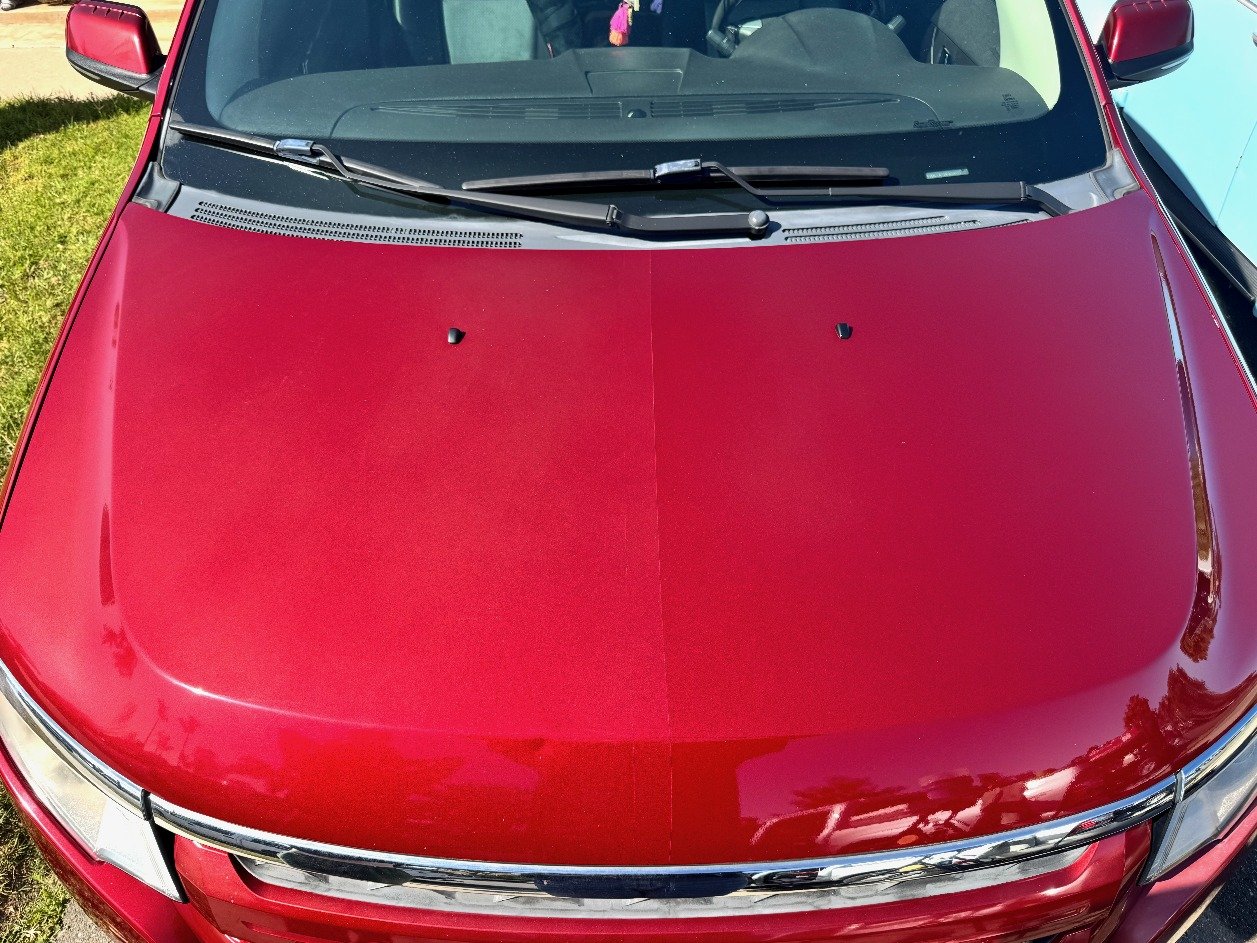
Protection that changes how the vehicle gets maintained.
A ceramic coating is designed to protect properly prepared paint while making routine maintenance easier. Once cured, the coating creates a durable, hydrophobic surface that changes how water and contamination interact with the paint.
We offer two ceramic coatings, a 3-5 year coating and a higher-grade 6-8 year coating built for longer-lasting protection. Installation and preparation are identical either way, the difference is how many years of protection the coating itself is built to hold up.
Water is more likely to bead and release from the surface instead of sitting on the paint. Dirt and road film don't adhere as aggressively, which means routine washing can take less effort and less scrubbing.
That matters because aggressive washing is one of the ways people slowly put swirls back into paint. A coating doesn't replace proper washing, but it can make proper maintenance easier and less abrasive.
The value isn't simply that the vehicle stays cleaner. It's that maintaining the vehicle becomes easier, which helps preserve the finish you invested in correcting.
A coating follows the condition of the paint underneath it, which is why every vehicle we coat, even a brand-new one, gets a clay and iron decontamination and a light paint enhancement polish first. It's what gives the coating a clean, bondable surface to grip, not an optional step. If the paint is heavily swirled or hazy, that baseline isn't enough on its own, and a fuller correction is recommended before coating.
Request a Quote →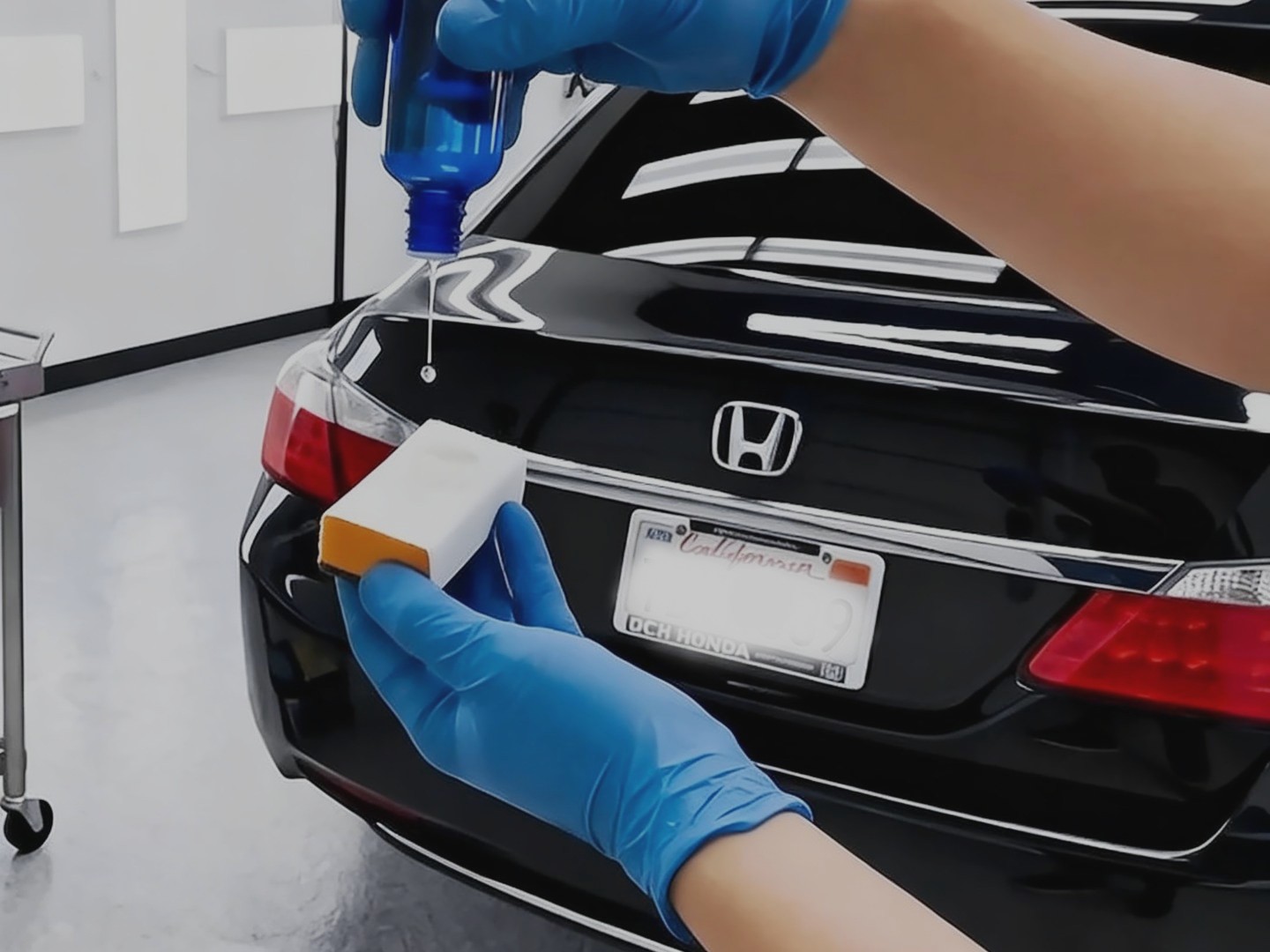
Setting expectations.
Ceramic coating provides durable protection, but it isn't designed to prevent every type of damage a vehicle can experience. It won't stop rock chips, dents, deep scratches, or damage from an automatic car wash.
What it can do is create a durable sacrificial layer that helps the paint resist UV exposure, environmental contaminants, light chemical staining, and water spotting, while making routine washing and maintenance easier.
What a ceramic coating is designed to do:
- Improve water behavior and hydrophobicity
- Make routine washing easier
- Reduce how strongly dirt and road film adhere
- Help resist UV and environmental exposure
- Help resist light chemical staining and water spotting
- Help preserve the appearance of a properly corrected finish
What it isn't designed to do:
- Stop rock chips
- Prevent dents
- Stop deep scratches
- Make paint completely scratch-proof
- Protect against every form of physical damage
- Make improper washing harmless
The coating is only one part of the system. Proper preparation, safe washing, and regular maintenance are what allow it to perform as intended.
Durable protection. Realistic expectations.
Not sure what your paint needs?
Every vehicle starts from a different place, but every vehicle gets the same baseline prep, a clay and iron decontamination plus a light paint enhancement polish, before we ever apply a coating. No exceptions, not even a brand-new car. What varies is whether your paint needs more than that.
Your vehicle may benefit from paint correction if:
- Swirl marks are visible in direct sunlight
- The paint looks dull or hazy even after washing
- Light scratches and wash marks are visible up close
- The finish lacks depth or clarity
- You want the highest level of gloss before applying protection
Your vehicle may only need our standard prep if:
- The paint is already in exceptional condition
- The vehicle is new, garage-kept, or recently corrected
- You mainly want easier maintenance and long-term protection
- You're prepared to maintain the coating properly after installation
Every vehicle we coat, even a brand-new one, gets a clay and iron decontamination and a light paint enhancement polish first, no exceptions, it's what lets the coating bond properly. If your paint needs more than that, we recommend a fuller correction before applying the coating.
The same sequence every time. No shortcuts.
Vehicle Inspection
Paint is evaluated under proper lighting to determine the type and severity of defects and what level of correction is appropriate.
Wash & Decontamination
The vehicle is safely washed, chemically decontaminated, and clay and iron treated to remove bonded contamination before polishing. Every vehicle gets this step, even a brand-new one.
Paint Preparation
The vehicle is dried and sensitive areas are taped and protected before polishing begins.
Paint Correction
At minimum, a light enhancement polish is always performed before coating, ceramic never goes on unpolished paint. If your paint needs more, we step up to one-step or multi-step correction based on its condition.
Panel Preparation
Polishing oils are removed so the coating can properly bond to the prepared clear coat.
Ceramic Coating Application
The coating is applied panel by panel, leveled, and inspected under proper lighting.
Final Inspection
The vehicle receives a final inspection and walk-around before it is released.
Straightforward pricing, confirmed before we start.
Paint Correction
| Service | Starting At |
|---|---|
| Clay & Decontamination | $100 |
| Paint Enhancement | $250 |
| One-Step Correction | $400 |
| Multi-Step Correction | $600 |
Ceramic Protection
| Service | Starting At (Sedan) |
|---|---|
| 3-5 Year Ceramic Coating | $649 |
| 6-8 Year Ceramic Coating | $849 |
Starting prices are based on standard-size vehicles. Final pricing depends on vehicle size, paint condition, and service requirements.